
Behind the Glass: The Puppy Mill-to-Pet Store Pipeline
A closer look at the breeders, brokers and pet stores behind Idaho's retail puppy trade, and the dogs consumers never see.
Download PDF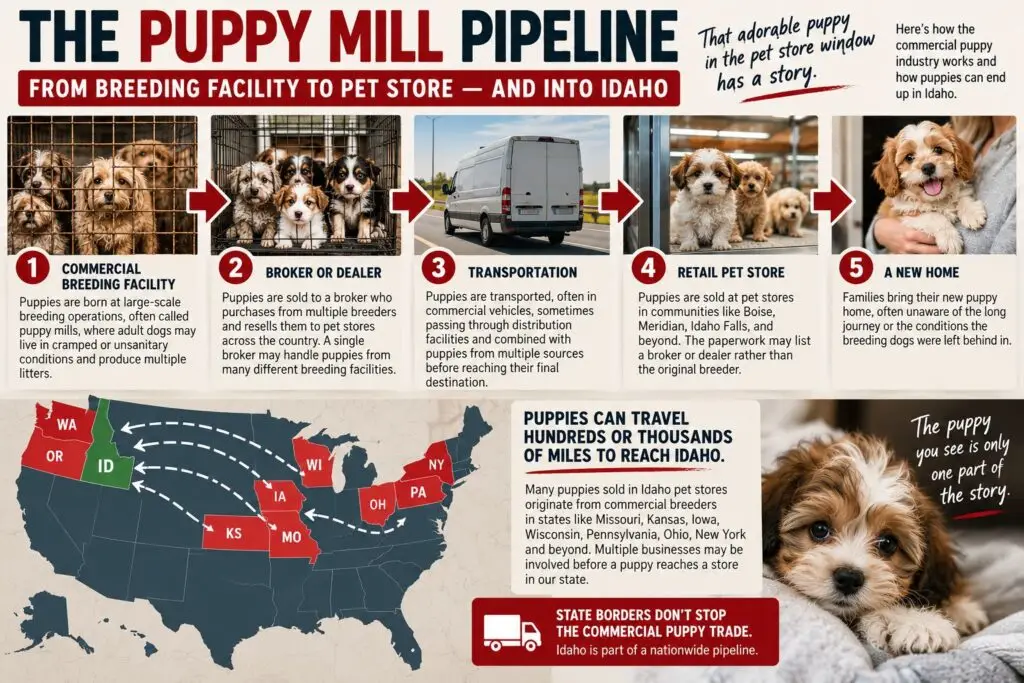
That adorable puppy in the pet store window has a story. But where did that story begin?
It’s easy to fall in love with a puppy behind the glass. Families see wagging tails, bright eyes and a new companion waiting to go home. What they rarely see is the network of breeders, brokers and transporters that may have brought that puppy to the store, or the adult dogs left behind.
Across the country, puppies are produced and sold through a commercial supply chain that can stretch across several states. Some come from breeders who invest in proper veterinary care, health testing and humane conditions. Others come from breeding operations where the number of puppies produced matters more than the animals’ welfare. The difference isn’t always visible from the retail display.
Before the pet store
A puppy sold in Idaho may have been born in Missouri, Kansas, Iowa or another state, then purchased by a broker who collects puppies from multiple breeders and supplies retail stores. A broker’s name on a document may not identify the actual breeding facility. By the time a puppy arrives at the store, customers may have little idea where its mother lives or how often she has been bred.
In troubled breeding operations, adult dogs may live for years in crowded, dirty enclosures, receiving limited socialization, grooming or veterinary care. The puppies leave for new homes. Their mothers stay to produce the next litter.
Humane World for Animals, formerly the Humane Society of the United States, has documented examples of these conditions in its annual Horrible Hundred reports. Drawing on inspection and enforcement records, the reports identify 100 examples of problematic breeding facilities. Missouri has repeatedly figured prominently. Some listed facilities have held USDA licenses, illustrating why a license alone cannot tell buyers everything they need to know about a dog’s life.
The connection to Idaho
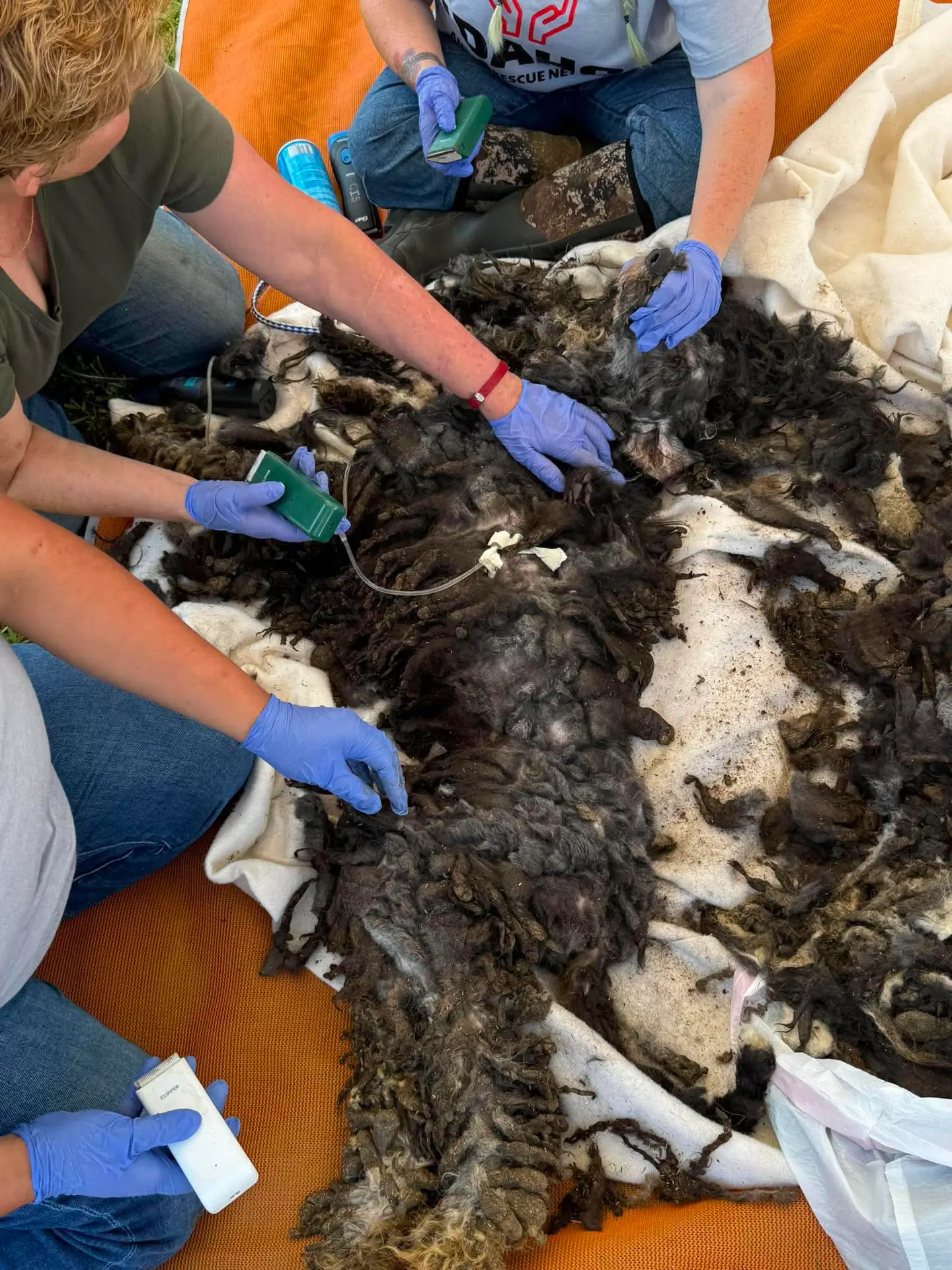
Through our research, Idaho Animal Rescue Network has connected some Missouri, Pennsylvania, and other out-of-state breeders to pet stores selling puppies right here in Idaho. We’re continuing to examine the breeders, retailers and documentation behind those connections, and we plan to share a closer look in an upcoming article.
But the concerns don’t stop at state lines. We also know that some Idaho pet stores purchase puppies from breeders they describe as “local.” That word may reassure a buyer, but geography is not a measure of animal welfare. We are aware of local breeding operations with seriously concerning living conditions. A breeder can be a short drive away and still fail the dogs in their care.
Whether a puppy comes from Missouri, Ohio, or Idaho, consumers deserve to know where it was born, how it was raised and what conditions its parents live in. A local breeder isn’t necessarily a responsible breeder, just as a USDA license isn’t a guarantee of humane treatment.
None of this means every pet store puppy comes from a puppy mill. Linking a particular retailer to a problematic breeder requires records, not assumptions. That’s why we’re reviewing breeder information, broker relationships and other documentation as we continue this work.
What paperwork doesn’t tell you
Retailers may point to USDA licensing, American Kennel Club registration, veterinary examinations or health guarantees. Each can provide information, but none by itself proves that breeding dogs live in humane conditions. AKC registration concerns pedigree, not daily care. A veterinary exam is important, but it cannot rule out every congenital or inherited condition. And health guarantees may contain restrictions that families don’t discover until a puppy becomes sick.
Another concern is that some pet stores don’t provide important paperwork until after the sale. Buyers may be given excuses about why breeder details, veterinary records or other documents cannot be produced beforehand. That means families can be asked to commit financially before they have the chance to review information that could affect their decision. Ask to see the records before paying or signing anything, and be wary of a seller who repeatedly delays or refuses.
Some families bring home puppies who soon need treatment for respiratory illness, parasites or gastrointestinal problems. Others face far more serious diagnoses, including congenital heart defects or orthopedic conditions. Illness alone doesn’t prove irresponsible breeding, but poor sanitation, inadequate medical oversight and stressful transportation can increase risks. Families may be left with enormous bills and heartbreaking decisions long after everyone in the supply chain has been paid.
We’ve seen what happens when breeding goes wrong
In May 2026, IARN helped respond to a breeding-related animal welfare case near Fernwood in Benewah County. Responders recovered 38 living dogs and puppies and found 10 deceased dogs. Many of the survivors needed grooming, veterinary assessments and continuing care. These weren’t just numbers. They were individual animals whose needs became clearer over weeks and months in rescue.
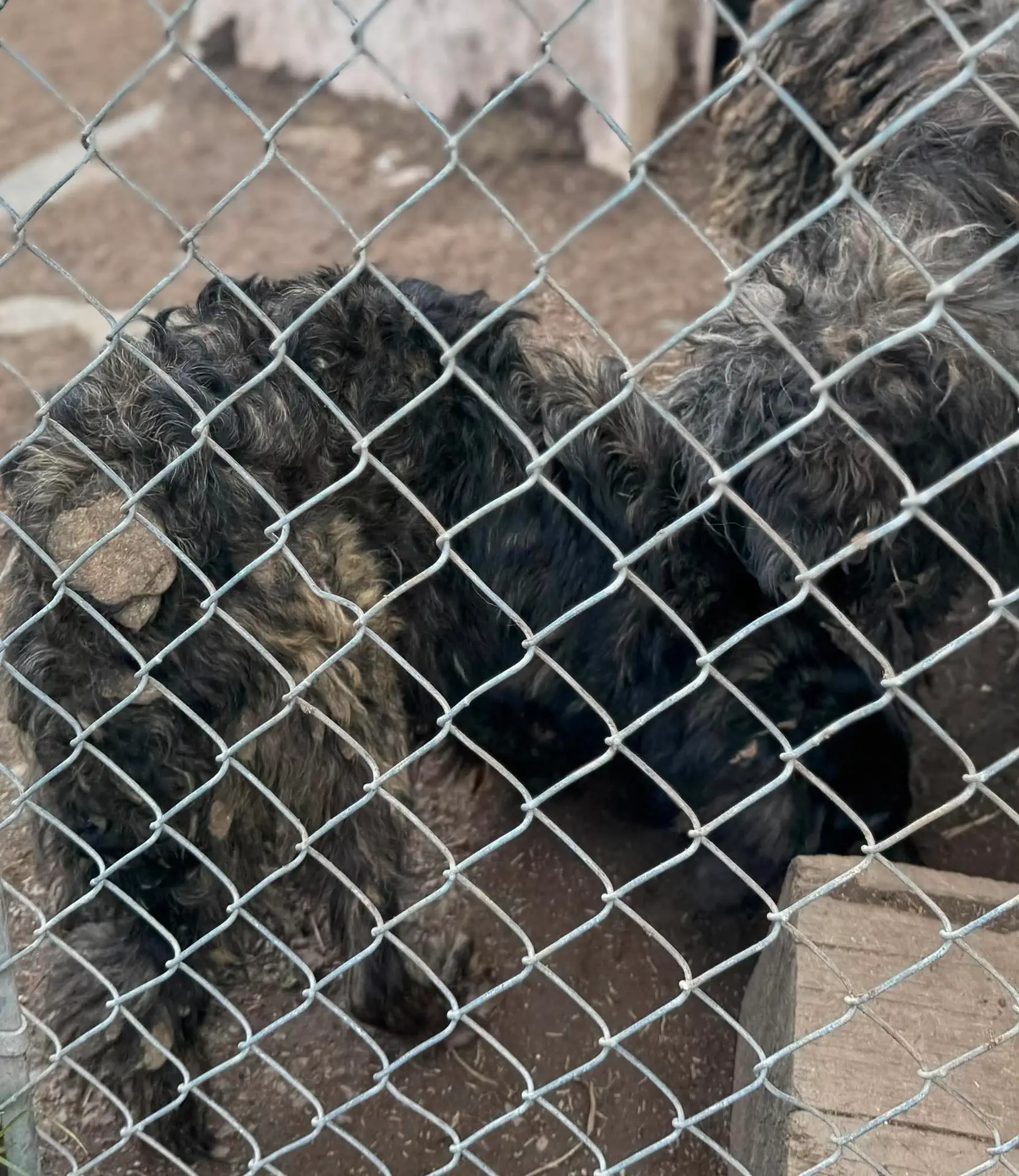
One of those puppies was Pepe. He was diagnosed with patent ductus arteriosus, a congenital heart defect that required specialized, lifesaving surgery at Washington State University’s College of Veterinary Medicine. With the help of veterinary specialists, foster caregivers and donors, Pepe received that care and found a loving home.
Pepe’s diagnosis by itself doesn’t establish how a breeder operated. But the conditions in the Benewah case and the medical needs discovered afterward are a reminder that an adorable puppy’s appearance reveals very little about the care, health or history behind it.
When a breeding operation fails its animals, rescuers, veterinarians, law enforcement, foster families and donors are often the ones left to pick up the pieces. We celebrate every new beginning, but we would much rather see that suffering prevented.
Questions worth asking before you buy
Ask a pet store for the breeder’s full name and location, any applicable USDA license information and whether a broker handled the puppy. Request veterinary and transportation records. Look up inspection and enforcement histories, ask about the puppy’s parents, and question any seller who won’t explain where the dogs are raised. Be cautious of pressure to buy immediately or sign financing paperwork before you have the answers.
If you’ve already purchased a puppy and have concerns, keep your contract, advertisements, receipts, veterinary records and communications. Those documents can help establish what happened and may be important if you report suspected neglect or misleading sales practices.
Where to report concerns
If you suspect animal cruelty, neglect, or troubling practices involving a breeder or puppy retailer, report what you know to the appropriate agency. Save photographs, advertisements, contracts, veterinary records and communications when available. Do not trespass or put yourself at risk while gathering information.
- Local law enforcement or animal control: Report suspected cruelty or neglect to the agency with jurisdiction. Record the date, time, location and details of your report, and ask for a case number.
- Idaho Animal Rescue Network: Submit an animal welfare concern.
- Better Business Bureau (BBB): File a business complaint.
- Idaho State Department of Agriculture: For matters within its Animal Industries jurisdiction; contact the local sheriff for dog, cat or horse neglect concerns. File an Animal Industries complaint.
- Idaho Attorney General, Consumer Protection: File a consumer protection complaint.
- USDA Animal Welfare: For animals and facilities covered by federal animal welfare laws. File a USDA animal welfare complaint.
- Humane World for Animals: How to report suspected animal cruelty.
Different agencies handle different concerns. A consumer complaint does not replace a cruelty report to local authorities when an animal may be in danger.
Our upcoming coverage will take a closer look at both out-of-state and local breeding sources supplying Idaho retailers, along with the records and consumer experiences we’re reviewing. Our goal is transparency and accountability, not blanket accusations against every breeder or business. Stay tuned …